
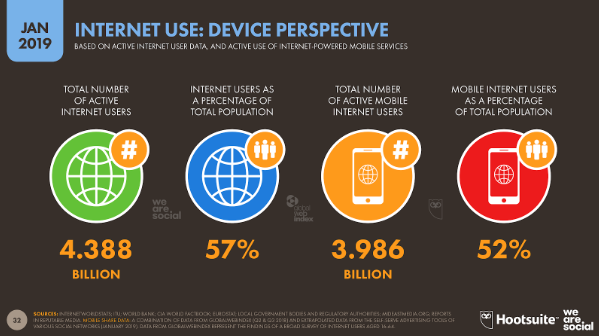
We all know that the Internet is progressing in huge leaps and bounds, since its initial stuttering steps in the 90’s. But not everyone in the world is lucky enough to have Internet access. Huge swathes of Africa, for example, are still offline. But progress to bring the Net to as many people as possible is being made all the time, for example with cheap laptops, and new Internet service providers.
Which begs the question – who IS online? Which countries dominate the Net and how do the numbers break down? What do they spend their time doing, and which countries have declared Internet access a legal right?
All this and more in today’s infographic. Let us know in the comments what you think of it and whether you agree or disagree with the numbers. Also tell us whether you think having online access should be a legal right in your country, and why.

During an average workday, a single minute might seem negligible.
If you’re lucky, a minute might buy you enough time to write a quick email, grab a coffee from the break room, or make small talk with a coworker.
But in other situations, a minute can also be quite extraordinary. Imagine being a quarterback in the Superbowl in overtime, or finding yourself in a life-and-death situation in which every second counts towards the outcome.
Visualizing an Internet Minute
When it comes to gauging the epic scale of the internet, it would seem that each minute leans closer to the extraordinary side of the spectrum.
Today’s infographic from @LoriLewis and @OfficiallyChadd aggregates the online activity of billions of people globally, to see what an internet minute look like.
A Side-by-Side Comparison
The internet is incredibly dynamic, which means there are always new and interesting segments that are emerging out of the internet’s ether.
To get a sense of this, take a look at the comparison of last year’s version of this graphic with the more recent entry:

Platforms such as Instagram and Netflix continue to grow at a blistering pace, while new categories such as smart speakers are quickly building a strong foundation for the future.
Last year, for example, only 67 voice-first devices were being shipped per minute – and in 2019, there are now 180 smart speakers being shipped in the same window of time.
What will this look like in 2020?
Going Sideways or Backwards
Interestingly, even as more and more people gain access to the internet around the world each year, there are still parts of the web that are plateauing or even shrinking in size.
You’ll see that Facebook logins and Google searches both increased only incrementally from last year. Further, the amount of emails getting sent is also quite stagnant, likely thanks to to the rise of workplace collaboration tools such as Slack.
Snap is another story altogether. In the last year, the app saw a decrease in millions of users due to the infamous redesign that helped torpedo the app’s rising popularity.
Regardless, we’re certain that by this time next year, an internet minute will have changed significantly yet again!
What Happens in an Internet Minute in 2019?
 LIAR PEYK INTERNET